
Notes from the work, not the hype cycle.
Operator-grade thinking on putting AI to work: where it earns its place, how to build agents and Skills, and what it takes to run AI in production. Written by the people who ship it.

AI-driven, not AI-decorated: where AI actually earns its place
Most AI programs stall because they add tools instead of changing the work. Becoming AI-driven means embedding AI where it creates advantage — and refusing it where it does not.

RAG Evaluation Without Illusions: How a 97% AI Score Becomes a Business Risk
A high RAG evaluation score can hide a dangerous flaw: the system may have learned the test instead of learning to handle real business questions. Enterprise teams need clean evaluation design, human judgment, and operational governance before trusting AI in production.

Private LLM Serving in One Command: Why Hugging Face Jobs and vLLM Matter
Hugging Face Jobs and vLLM make it possible to launch a private, OpenAI-compatible LLM server in minutes. The real value is not only technical convenience, but faster experimentation, lower infrastructure risk, and a more practical path toward enterprise AI agents.
GPT 5.6 and the New Reality of Controlled AI Releases
The reported White House request to limit GPT 5.6 access is not just a policy story. It signals a new operating model for enterprise AI: controlled rollout, stronger governance, and a sharper distinction between experimentation and production.
Smart RAG Needs a Judge, Not Just a Search Engine
Enterprise RAG fails when retrieval is treated as simple semantic search. A production-grade architecture needs multiple retrieval signals, an LLM-based arbiter, audit trails, and a disciplined human-in-the-loop model.

From Logistic Regression to Credit Scores: Turning Coefficients Into Business Risk
Logistic regression remains one of the most practical foundations for credit scoring because it translates statistical relationships into decisions that risk, product, finance, and compliance teams can understand. The real work is not only predicting default, but converting coefficients into a stable, explainable, and governable business risk score.

Real-Time Voice Agents Are Becoming Business Infrastructure
Amazon Nova 2 Sonic signals a practical shift in conversational AI: real-time speech agents are moving from impressive demos to operational systems that can change service economics, conversion rates, and workforce design.

How Language Models Remember Facts: What Gemma Reveals About AI Reliability
New interpretability work on Gemma suggests that factual recall is not a simple lookup operation, but a staged internal process. For enterprises, that changes how we should think about reliability, knowledge updates, AI agents, and human oversight.

Jalapeño Is OpenAI’s Bet on Owning the AI Stack
OpenAI’s first custom inference chip is not merely a hardware announcement. It is a strategic move to reduce operating costs, improve reliability, and control more of the AI value chain from model design to real-time execution.

Weekly AI Releases Are Not a DevOps Trick. They Are an Operating Model
Hugging Face’s move to weekly AI-assisted releases shows how enterprises should think about AI in software delivery: faster cycles, deterministic controls, human approval, and serious supply chain discipline.
Claude Tag and the Quiet Arrival of AI Inside the Enterprise Workflow
Anthropic’s Claude Tag is more than another Slack integration. It signals a shift from AI as a separate tool to AI as a persistent participant in the daily flow of work.

AI Loops: The Next Operating Model for Autonomous Agents
AI loops move autonomous agents from one-off task execution to continuous, self-directed work. For enterprises, the opportunity is real, but only if cost control, governance, observability, and human supervision are designed from day one.

PP-OCRv6: Lightweight OCR Still Matters for Enterprise AI
PP-OCRv6 shows why specialized OCR remains a serious enterprise capability, especially when organizations need fast, multilingual, low-cost text extraction from documents, screens, labels, and operational images.

Free AI Tokens Are Not Free: The Enterprise Cost of Model Lock-In
Subsidized AI tokens can accelerate adoption, but they can also quietly reshape architecture, budgets, and operational dependency. Enterprises need a multi-model strategy before the invoice arrives.

The Hidden AI Tax: Why Data Centers Are Raising Your Costs
AI is not only changing productivity. It is changing the cost structure of electricity, hardware, SaaS, cloud infrastructure, and enterprise operations. The companies that win will not be the ones that use the most tokens, but the ones that use AI with precision.

Samsung’s Enterprise AI Move Is Bigger Than ChatGPT Licenses
Samsung’s broad deployment of ChatGPT Enterprise and Codex is not just another productivity story. It signals a shift toward industrialized enterprise AI, where governance, operating models, expert judgment, and internal agent capabilities matter more than tool adoption alone.

Tool Calling in AI Agents: The Bridge Between Language and Real Work
Tool calling is the mechanism that turns language models from smart text generators into controlled operators of business processes. For enterprises, it is not a developer detail but a strategic integration layer for automation, governance, and scalable AI agents.

Europe’s AI Wake-Up Call Is an Enterprise Risk Memo
A viral AI sovereignty scenario warns that Europe could become dependent on foreign compute, models, and automation infrastructure. The real lesson for enterprises is clear: AI strategy must combine governance, deep domain expertise, internal agent capabilities, and operational resilience.
AWS Brings Serious Observability to AI Inference
AWS has added detailed inference monitoring to SageMaker AI through CloudWatch, reducing the operational burden of running LLMs in production. The real value is not another dashboard, but a stronger operating model for cost, reliability, and scalable AI adoption.

Healthcare AI Has a Workflow Problem, Not a Model Problem
A new healthcare executive survey shows that AI is trusted in principle but still weakly embedded in daily decisions. The real opportunity is not another pilot, but disciplined integration into clinical, operational, and financial workflows.

Measuring AI Agents in Open Source: Why the Right Answer Is No Longer Enough
AI agents should not be evaluated only by whether they eventually reach the correct answer. For software teams, the real benchmark is whether an agent can discover, understand, execute, recover from errors, and complete a task with minimal cost and supervision.
AWS Quick and the Shift From Enterprise Chat to Enterprise Execution
AWS is positioning Amazon Quick as more than another AI assistant. The real story is the emergence of an enterprise execution layer where agents monitor, decide, draft, update systems, and force companies to rethink governance, work design, and operational ROI.

When General AI Beats the Specialist: What MIT’s Game Research Means for Enterprise Strategy
MIT research on imperfect-information games challenges a comfortable assumption: specialist algorithms do not always beat general learning methods. For enterprises, the real lesson is that AI advantage will come from evaluation discipline, simulation infrastructure, and operational judgment, not from algorithm worship.

Your Churn Prediction Threshold Is a Pricing Decision
A churn model is not successful because it predicts well. It is successful when its decision threshold reflects customer economics, retention capacity, and the real cost of being wrong.

The AI ROI Bill Has Arrived
Enterprises are discovering that AI adoption without process engineering can burn budgets faster than it creates value. The next phase of AI strategy will be defined by measurable workflows, governed agents, and human oversight that scales.

SageMaker Async Inference Just Removed an Annoying AI Architecture Bottleneck
AWS now lets SageMaker AI Async Inference accept small payloads directly in the API request body, removing the mandatory S3 input step. For enterprise AI teams, this is a practical improvement in latency, cost, permissions, and operational simplicity.

AWS Context Signals the Next Enterprise AI Battleground
AWS is moving beyond model access and into the harder enterprise problem: trusted context for AI agents. The strategic lesson is clear: organizations that cannot manage data meaning, permissions, and operational knowledge will struggle to scale agents safely.

The Next AI Agent Bottleneck Is Not Intelligence. It Is Communication
Microsoft Research’s OPTiMACS work points to a crucial shift in enterprise AI: multi-agent systems will not scale if every agent keeps writing long natural-language explanations. The next advantage will come from smarter, structured communication that reduces cost, ambiguity, and operational risk.

Agentic Resource Discovery: The Missing Marketplace Layer for AI Agents
Agentic Resource Discovery could become the search and trust layer that AI agents need in order to find tools, Skills, and MCP resources at runtime. For enterprises, the opportunity is not only technical efficiency, but a new operating model for governed automation.

Enterprise Token Budgets Cannot Stay Open Forever
AI adoption is moving from experimentation to financial discipline. Enterprises now need token governance, model routing, and ROI metrics that measure business outcomes rather than raw usage.

Why AI Agents Fail Quietly in Production
AI agents rarely fail like traditional software. The most dangerous failures are the ones that return a valid response, pass the dashboard, and corrupt the business process underneath.

When AI-Powered Becomes a Warning Label
Consumers are not rejecting AI itself. They are rejecting brands that use AI as a marketing badge while making the customer experience feel cheaper, less accountable, and less human.

Turning AI Innovation into Sustainable Economic Growth
AI creates lasting economic value only when it moves from isolated pilots into operating models, governance, skills, and AI-native processes. The winning organizations will combine augmentation with process replacement, while keeping humans in the loop where judgment truly matters.

The Hidden Enterprise Knowledge Problem AI Cannot Ignore
Enterprise AI does not fail only because of weak models. It often fails because the most valuable operational knowledge was never written down, structured, governed, or made usable by machines.

AI Adoption Fails When Training Becomes the Strategy
Enterprise AI adoption does not fail because employees lack motivation. It fails when training is disconnected from workflows, incentives, managerial reinforcement, and the operating model required to turn AI into measurable performance.

Claude Code Is Not a Shortcut. It Is a New Engineering Discipline
Claude Code can dramatically accelerate software development, but only when teams manage architecture, context, planning and review with discipline. The real advantage comes from aligning AI agents with how the business actually wants software to be built.

MCP Changed the Architecture of AI Agents
Model Context Protocol is moving AI agents from isolated prototypes to manageable enterprise infrastructure. The real shift is not better tool calling, but clearer boundaries between models, workflows, tools, permissions, and human approval.

The Next Generation of AI Agents for Enterprise Competitive Research
Competitive research is becoming a managed AI operation, not a sequence of prompts. The next generation of enterprise agents will be judged by isolation, observability, governance, and their ability to turn messy external data into reliable management insight.

What the U.S. Army’s AI Base Operations Push Teaches Every Enterprise
Fort Lee’s AI workshop shows that enterprise AI succeeds when it is treated as an operating model, not a software purchase. The real lesson is disciplined preparation, measurable pilots, human accountability, and internal capability building.

When AI Optimization Backfires: The Hidden Cost of Local Efficiency in Logistics
AI can reduce delivery costs while quietly damaging service quality, customer trust, and operational resilience. The real challenge is not optimization itself, but defining the right system-wide objective before the model starts improving the wrong thing.

AI Agents Need Diagnostics, Not Guesswork
AWS Detectors for the Strands Evals SDK signal a mature shift in AI agent operations: from manual trace inspection to automated failure diagnosis. For enterprises, this is not just a developer convenience; it is a control layer for reliability, cost, and scalable human oversight.

The Real AI Advantage in Business Is Not Automation
AI can reduce manual work, but its strategic value is far greater: improving the quality, speed, and scale of business decisions. The winners will be the organizations that combine deep business expertise, AI literacy, and operational discipline.

AI in the Classroom: The Real Risk Is Misuse, Not the Technology
AI is already inside classrooms and corporate training programs. The strategic question is no longer whether learners will use it, but whether institutions can teach them to think better with it rather than think less because of it.

Shadow AI Is Not an IT Problem. It Is an Operating Model Problem
Employees are adopting AI faster than governance teams can approve it. The answer is not prohibition, but a risk-based operating model that gives people better, safer tools than the ones they find on their own.

AI Agents Are Compressing Catalyst Discovery From Years to Minutes
AI agents are beginning to change catalyst discovery by automating simulation, data extraction, experimental planning, and scale-up intelligence. The strategic lesson for industrial companies is clear: AI advantage will come from domain depth, data infrastructure, and human-supervised agent operations, not from generic tooling alone.

Vision LLMs Are Changing PDF Processing for Enterprise RAG
Vision LLMs turn charts, diagrams, scans, and visual layouts inside PDFs into searchable knowledge for RAG systems. The real opportunity is not better document parsing alone, but a smarter enterprise architecture that knows when visual reasoning is worth the cost.

AI Export Controls Are Now a Boardroom Risk
The reported restriction of advanced AI models is more than a policy story. It is a warning to every enterprise that has built critical workflows around one vendor, one model, or one geopolitical jurisdiction.

Enterprise RAG Without Cloud Uploads: Why Local PDF Parsing Is Now a Strategic Control Point
Enterprise RAG succeeds or fails on document quality, not only model quality. Local PDF parsing gives organizations a practical way to protect sensitive files while improving retrieval, explainability, and cost control.

The Strings Problem: What a Probability Puzzle Teaches Us About Data Science in the AI Era
A simple probability puzzle reveals a serious lesson for modern AI teams: better answers come from better problem framing, not just faster code generation. The organizations that win with AI will combine mathematical judgment, business experience, and scalable human oversight.

When General AI Beats Medical AI: What Healthcare Leaders Should Learn
Recent evidence suggests that frontier general-purpose AI models can outperform specialized medical AI tools on several clinical benchmarks. The strategic lesson is clear: durable value in healthcare AI is moving from the model itself to data, workflow integration, governance, and operational execution.

olmo-eval and the New Discipline of LLM Quality Engineering
olmo-eval signals an important shift in AI development: evaluation is no longer a final benchmark exercise, but a continuous engineering discipline. For enterprises, this means better decisions, lower model risk, and a clearer path from experimentation to reliable AI operations.

How AI Agents Stop Forgetting and Start Working as a Team
Single-agent AI workflows often fail because the plan lives inside one fragile context window. Dynamic agent orchestration moves the plan into an external workflow, allowing agents to specialize, challenge each other, and deliver more reliable enterprise outcomes.

Zuckerberg's AI Reset: Meta Shows the Real Cost of Workforce Transformation
Meta's AI-driven reorganization is not just a technology story. It is a management case study in how agents, automation, workforce design, and executive communication collide inside a large enterprise.

Private Regression Is Becoming Practical for Ads, Recommendations, and Finance
Differential privacy is moving from theoretical compliance language into practical enterprise machine learning. Cond-DP shows how public features can make private regression faster and more useful without spending additional privacy budget.

KPMG’s Pulled AI Report Is a Governance Warning, Not a Model Failure
KPMG’s removal of an AI report after alleged model hallucinations is not just an embarrassment for a consulting firm. It is a clear signal that enterprises need risk-based human oversight, stronger source verification, and serious AI operating discipline.

Amazon Bedrock and the Industrialization of Intelligent Document Processing
Amazon Bedrock is pushing intelligent document processing beyond impressive demos and into production-grade AI operations. The real value is not model access alone, but the architecture around speed, cost, governance, and human oversight.

Claude Moves Into Core Systems: Why Regulated Enterprises Should Pay Attention
Anthropic’s alliance with DXC signals a serious shift: Claude is moving from productivity experiments into the operational heart of banks, insurers, airlines, manufacturers, and public-sector organizations. The opportunity is enormous, but only enterprises with strong governance, real domain expertise, and scalable human oversight will turn it into durable value.

The AI IPO Wave Is Not a Funding Event. It Is a Market Reset
Four AI-linked giants may raise more capital than the entire U.S. IPO market raised over the last five years. The real story is not valuation hype, but a strategic shift in how AI infrastructure, enterprise adoption, and operational advantage will be financed.

AWS Agent-EvalKit Signals a New Maturity Test for Enterprise AI Agents
AWS Agent-EvalKit brings systematic, trace-based evaluation into AI agent development. For enterprises, the real message is clear: autonomous agents need operational governance, not just prompt tuning.

Codex Is Entering the Enterprise Agent Race
OpenAI’s planned acquisition of Ona signals a strategic shift for Codex: from coding assistant to cloud-based enterprise software agent. The real competition is no longer model quality alone, but secure execution, governance, and operational scale against tools like Claude Code.

How to Turn Average AI Outputs Into Exceptional Business Results
Generative AI often produces the most statistically likely answer, not the best business answer. The difference between average and exceptional outcomes comes from domain expertise, disciplined review, strong operating design, and a practical human-in-the-loop model.
The One-Report CEO: How AI Is Rewriting Organizational Design
Dario Amodei’s unusually lean management structure at Anthropic is not a curiosity. It is a signal of how AI changes span of control, operating models, and the economics of organizational design.

The $7,500 AI Employee Question: Cost Is Not the Real Problem
AI spending is rising fast, but the real strategic issue is not the monthly token bill. The harder question is whether saved productivity is actually becoming organizational value.

When AI Memory Becomes a Liability
AI memory promises personalization, but new research shows it can also amplify user bias and reduce accuracy. For enterprises, the lesson is clear: memory must be governed like a business-critical system, not treated as a harmless product feature.
AI Exaggeration: Why the End-of-Work Narrative Is a Marketing Tactic
AI is already changing work, but the claim that it will soon replace entire workforces is often more useful as a valuation story than as an operating model. The real enterprise opportunity is process-level automation, governed by deep business expertise and human supervision at scale.

Can an AI Model Prove It Really Forgot?
Machine unlearning is becoming a board-level governance issue: not because models must forget, but because enterprises will need evidence that they did. New statistical audit methods point toward a more serious standard for AI privacy, procurement, and model risk management.

Credit Scoring in the AI Era: Why Accuracy Is Not Enough
AI can accelerate credit model development, but it does not remove the need for explainability, stability, validation, and expert judgment. In credit risk, the best model is not always the most powerful one; it is the one the institution can trust, govern, and defend.

The AI Leadership Bottleneck: Why Today’s Efficiency Gains May Create Tomorrow’s Management Crisis
AI is quietly removing the junior work that used to train future managers. Enterprises that automate entry-level experience without redesigning apprenticeship will face a leadership shortage within five years.

LLMs in Recommendation Systems: Higher Precision Without Burning the Budget
Large language models can dramatically improve recommendation quality, but only when they are used at the right stage of the system. The winning architecture is not replacing the recommender with an LLM, but combining fast candidate retrieval with intelligent LLM-based reranking.

AgentCore Moves AI Coding Agents from Laptops to the Cloud
Amazon Bedrock AgentCore signals a practical shift in AI software development: coding agents are becoming managed cloud workloads, not fragile laptop processes. For enterprises, the real story is governance, security, scalability, and the operating model required to manage digital workers.

Teach Once, Reuse Often: What Syll Means for Enterprise AI Agents
Syll points to a practical future for AI agents: teach a procedure once, preserve it as an editable skill, and reuse it across APIs, command lines, and visual interfaces. For enterprises, the real opportunity is not novelty, but governed operational scale.

The AI Agent Economy Needs Governance, Not Wishful Emergence
AI agents can produce rich, adaptive behavior, but emergent behavior is not a dependable business control. Enterprises need to separate agent freedom from deterministic safeguards, scalable human oversight, and rigorous operational governance.
The AI Control Gap: Why Enterprise Governance Is Becoming a Board-Level Risk
IBM’s latest research exposes a widening gap between AI adoption and enterprise control. The real issue is not whether companies can deploy more AI, but whether they can govern agents, costs, security, and accountability at scale.

The Next Generation of Creative AI Applications
Creative AI is moving beyond one-shot prompts and pretty outputs. The next competitive edge will belong to applications that understand intent, translate meaning, and keep humans in the loop without slowing the business down.

A/B Testing Platforms: The Tool Is Only Half the Organizational Revolution
Choosing an experimentation platform is not a software procurement exercise. The real value comes from the operating model around it: governance, metric discipline, organizational learning, and the ability to make better product decisions at scale.

The Job Search Agent: What Small AI Models Teach Us About Real Enterprise Automation
A job search agent that reads a CV, finds relevant roles, and explains fit is more than a recruiting experiment. It is a practical example of how small, specialized AI systems can automate judgment-heavy workflows without removing human accountability.

Should AI Be Trained to Betray Its Users?
AI whistleblowing is not a science-fiction edge case. It is a governance question every enterprise deploying agentic AI must answer before agents are connected to sensitive workflows, data, and authority.

Pure Python MCP Servers Are an Enterprise AI Security Decision
A lean MCP server is not just an engineering shortcut. It is a practical model for giving AI agents controlled access to local files without creating unnecessary operational and security risk.

Small Language Models and the End of Crude Sentiment Analysis
Classic sentiment analysis is too blunt for modern customer intelligence. Open, fine-tuned small language models can identify nuanced emotions while giving enterprises more control over cost, privacy, and operational design.

Gemini Enterprise and the New Reliability Test for Enterprise AI
Gemini Enterprise is pushing enterprise AI beyond basic RAG by introducing agentic retrieval, context validation, and repeatable investigation workflows. The bigger message for leaders is clear: reliable AI is not a model feature, it is an operating model.

Time-Series Foundation Models Are Rewriting Enterprise Demand Forecasting
Time-series foundation models are changing demand forecasting from a collection of isolated statistical projects into a reusable enterprise capability. The real advantage comes when organizations combine foundation models, LoRA adapters, external business variables, and disciplined operational governance.
Voice AI Has Outgrown the Demo: Why Enterprise Agents Need Operational Benchmarks
EVA-Bench Data 2.0 signals a necessary shift in enterprise voice AI: from evaluating pleasant conversations to proving operational execution, policy compliance, and reliable tool use.

BBVA’s 75% MLOps Lesson: AI Scale Is an Operating Model, Not a Demo
BBVA’s new MLOps architecture with AWS shows what separates enterprise AI from isolated experiments: governed speed, disposable environments, and repeatable deployment. For financial institutions, the real lesson is not the cloud tooling, but the operating discipline behind it.

ChatGPT’s Dreaming Memory Upgrade: Why OpenAI Is Moving Toward Real Personal AI Assistants
OpenAI’s Dreaming upgrade is not just a better memory feature for ChatGPT. It is a signal that the next competitive layer in AI will be persistent context, operational reliability, and managed personalization at scale.

Hugging Face Is Turning the CLI Into an Operating Layer for AI Agents
Hugging Face’s agent-aware CLI is more than a developer convenience. It signals a shift toward software interfaces designed for autonomous AI workers, with direct implications for cost, reliability, governance, and enterprise automation.
AWS Bedrock Ops Alert and the New Discipline of Generative AI Operations
Generative AI operations are becoming a business-critical discipline, not just an infrastructure concern. AWS Bedrock Ops Alert shows where enterprise AIOps is heading: automated quota intelligence, contextual alerts, and human supervision at scale.

AI Agents in the Enterprise: What Automation Must Never Do Without Human Approval
Enterprise AI agents should be governed by the cost of a mistake, not by how impressive the model feels. The real discipline is defining what agents may do, what they may propose, and what must always require human approval.

AI-Powered Cyber Threats: Why Agentic Attacks Change the Security Equation
AI is no longer just helping attackers write phishing emails or malware snippets. Agentic systems are beginning to support reconnaissance, lateral movement, decision-making, and attack orchestration, forcing enterprises to rethink security, operations, and AI governance together.

Uber’s AI Spending Cap and the Rise of Token Economics
Uber’s decision to cap employee AI tooling spend is not a retreat from AI. It is a sign that token economics, governance, architecture, and measurable ROI are becoming board-level operating disciplines.

Microsoft ASSERT Signals a New Phase of Enterprise AI Governance
Microsoft’s open-source ASSERT framework shifts AI testing from generic model benchmarks to application-specific behavioral validation. For enterprises, this is not just a developer tool; it is a governance, operations, and risk-control milestone.

If AI Agents Fail 95% of the Time, Who Actually Loses?
AI agents are improving, but the gap between boardroom claims and operational reliability is still wide. The real losers are not always employees or vendors, but companies that replace disciplined process engineering with automation theater.

MIT’s ChartNet Shows Why Smaller AI Models May Win in Enterprise Analytics
MIT’s ChartNet research is more than a computer vision milestone. It is a reminder that enterprise AI performance often depends less on model size and more on domain-specific data, governance, and business process design.

AURA-Mem and the End of Wasteful Robot Memory
AURA-Mem shows that embodied AI does not need to write everything it sees into memory. For robotics, autonomous systems, and edge AI, this points to a more practical architecture: fixed memory, fewer writes, and decisions based on information that actually changes action.

OpenAI Codex Is Moving From Developer Tool to Knowledge Work Engine
Codex is no longer just a coding assistant. Its shift into knowledge work signals a bigger enterprise transition: employees will increasingly manage AI agents, not merely ask chatbots for answers.

Securing AI Agents on AWS: Why Secrets Management Is Now an Enterprise AI Control
AWS Bedrock AgentCore Identity can now use existing AWS Secrets Manager secrets for outbound authentication. That small technical change matters because it brings AI agents into the same security, audit, and governance model as production software.

RAG Is Not Machine Learning: The Costly Mistake Behind Failed Enterprise AI Projects
Enterprise RAG projects fail when they are treated like classic machine learning initiatives. The real challenge is retrieval architecture, document engineering, domain expertise, and disciplined evaluation.

AWS, MCP, and the New Control Layer for Enterprise AI Agents
AWS is turning MCP from a developer convenience into an enterprise control plane for AI agents. The real issue is no longer whether agents can act, but whether organizations can govern those actions safely, economically, and at scale.

Microsoft’s Open Agent Control Standard Is a Governance Signal, Not Just a Developer Tool
Microsoft’s Agent Control Specification points to the next phase of enterprise AI: portable governance for agents that act across systems. The real value is not only technical control, but a clearer operating model for trust, compliance, and scalable automation.

Anthropic’s Mythos Expansion: AI Security Becomes Critical Infrastructure Strategy
Anthropic’s expansion of Claude Mythos into critical infrastructure is more than a cybersecurity milestone. It signals a shift toward AI systems that can protect, prioritize, and operationalize security work at national scale.

AI in Financial Services: The $312 Billion Operating Model Shift
AI in financial services is moving from experimentation to institutional infrastructure. The strategic question is no longer whether banks, insurers, and fintechs will adopt AI, but whether they can build the governance, talent, and operating models required to capture its value safely.

When AI Helps Build Your Company, What Does It Learn?
AI platforms are no longer passive infrastructure. When they help design products, write code, automate workflows, and support customers, they may also absorb the strategic patterns that make a company valuable.

Data Integrity in AI: How Hashes and Ethereum Can Prove Which Dataset Was Used
AI systems are only as trustworthy as the data lineage behind them. Cryptographic hashes, combined with selective blockchain timestamping, can give organizations a practical way to prove dataset integrity without exposing sensitive data.

Agentic BI: How AI Agents Are Rewriting Business Intelligence
Agentic BI will not kill dashboards or eliminate analysts, but it will change the economics of analytics. The winning organizations will treat AI agents as governed analytical infrastructure, not as a chatbot layer on top of reports.
OpenAI on Amazon Bedrock: Why This Changes Enterprise AI Infrastructure
OpenAI’s availability through Amazon Bedrock is not just another model launch. It strengthens Bedrock as a serious enterprise AI control plane for security, governance, model choice, agents, and operational scale.

DuckDuckGo’s No-AI Surge Is a Warning Shot for Search Strategy
DuckDuckGo’s traffic spike around no-AI search is not a rejection of AI. It is a market signal that users, enterprises, and SEO teams want control, transparency, and choice in how AI mediates information.
Who Is Really Leading Enterprise AI Adoption? The S&P 500 Ranking Tells a Bigger Story
A new open-source ranking of S&P 500 companies shows that serious AI adoption is not limited to technology giants. The real leaders are organizations that connect AI literacy, executive sponsorship, operational pain, and scalable implementation.

Microsoft Dragon for Nursing: The Real Lesson Is Operational AI, Not Medical AI
Microsoft's nursing documentation initiative is a useful case study in how AI removes operational friction when it is embedded into the flow of work. The bigger lesson applies far beyond hospitals: AI succeeds when domain expertise, governance, process design, and human oversight are treated as one system.

Cutting LLM Costs in Enterprise Knowledge Graphs
Enterprise Knowledge Graph projects often waste LLM budget by sending too much low-value text to expensive models. A structural routing approach, supported by a Graphability Index, can reduce cost while improving extraction quality.

Metacognition and AI: The Management Skill That Separates Better Decisions from Faster Noise
AI adoption is no longer limited by access to tools. The real advantage now belongs to organizations that teach people how to think with AI without outsourcing judgment to it.

GitHub Copilot’s Token Pricing Shock: The End of Subsidized AI Coding
GitHub Copilot’s move from flat-rate pricing to token-based billing is more than a developer tools controversy. It is a preview of how enterprise AI costs will be measured, governed, and optimized.

Trustworthy RAG: Building PDF Answers with Citations, Evidence, and Source Highlighting
Enterprise RAG should not begin with vectors. It should begin with evidence, traceability, and a response structure that a legal, finance, or operations team can actually audit.

AWS Chronos-2 and the New Economics of Enterprise Forecasting
Chronos-2 signals a practical shift in time-series forecasting: from bespoke modeling projects to reusable forecasting infrastructure. For enterprises, the opportunity is faster planning, better uncertainty management, and more scalable operational decision-making.

From Customer Request to Working Code: What Braintrust Signals About the Future of Product Development
Braintrust’s reported use of Codex to turn customer feature requests into working preview branches within minutes is more than a productivity story. It shows how AI can compress the product feedback loop and reshape the economics of software teams.

AI Model Evaluation Has Outgrown the Chat Window
Frontier AI models are no longer simple answer engines. Serious evaluation now has to test the full operating system around the model, including tools, memory, retry logic, budgets, and human oversight.

Reliable AI Agent Testing Is Now an Enterprise Discipline
AI agents cannot be governed like ordinary software because their behavior is non-deterministic. Enterprises need versioned test datasets, regression suites, user simulations, and human oversight that scales beyond manual review.

Claude Opus 4.8 on Amazon Bedrock: Enterprise AI Agents Move Into the Secure Cloud Core
Claude Opus 4.8 on Amazon Bedrock is more than a new model option. It signals a practical path for enterprises to build AI agents inside governed, secure, scalable AWS infrastructure.

A New Operating Model for Financial Compliance
AWS has showcased a practical pattern for AML alert investigation using governed AI workflows, not free-form chat. The larger lesson is clear: financial institutions need AI processes that are controlled, auditable, and designed around expert human supervision at scale.

The Internet Is Being Rebuilt for AI Agents
AI agents are changing cloud economics, traffic patterns, and enterprise architecture. The winners will be organizations that treat agents as operational workers, not just technical experiments.
How to Test Deep AI Agents Before Production
Deep AI agents cannot be tested like ordinary software or single LLM calls. The right approach combines stochastic evaluation, step-level inspection, end-to-end traces, safety gates, online monitoring, and a human-in-the-loop model that scales.

AI Ethics Is Becoming an Operational Skill, Not a Philosophy Elective
AI ethics education is no longer an academic side discussion. The organizations that win with AI will be those that train people to test, challenge, govern, and improve AI systems before those systems touch real customers, employees, or financial decisions.

AI Model Trimming: Cutting Multilingual Models Down to Business Size
AI model trimming reduces multilingual models by removing irrelevant vocabulary tokens instead of retraining the model from scratch. For enterprises, it can lower memory usage, deployment cost, and latency, but only when paired with proper evaluation, governance, and domain expertise.
Local AI Agents: The Infrastructure That Turns Open LLMs Into Reliable Work Systems
Running an open language model locally is only the first step. The real enterprise value comes from the infrastructure that manages memory, state, performance, governance, and human supervision at scale.

Microsoft’s Efficient Attention Research and the Real Road to Million-Token AI
Million-token AI will not be won by context window size alone. The real breakthrough is making long-context decoding fast, affordable, and reliable enough for enterprise operations.

Why LLMs Still Fail at Real-World Mathematical Optimization
Large language models can draft optimization code, but they still struggle with real operational problems because the hard work is not syntax. It is business formulation, data transformation, constraint discovery, validation, and governance.

When the AI Judge Fails: Lessons from Autonomous Vehicle Evaluation
Autonomous vehicle AI exposes a broader enterprise problem: evaluation models can look statistically strong while failing at the decisions that matter. The next generation of AI governance must measure judgment, uncertainty, calibration, and operational risk, not just benchmark scores.

Endava, Codex, and the New Economics of Small Software Teams
Endava’s use of OpenAI Codex shows that AI in software delivery is no longer about writing code faster. The real enterprise value is turning senior engineering judgment into a scalable operating asset.

RSI Is the New AI Fault Line: What Recursive Self-Improvement Really Means for Business
Recursive self-improvement is becoming the new shorthand for the next major AI leap. The real question for executives is not whether machines will replace researchers tomorrow, but how today’s agentic systems already change software, operations, governance, and workforce design.

AI in the Boardroom: What Executives Are Finally Getting Right
Senior executives are moving beyond AI hype and focusing on operational efficiency, technical debt, trust, and human amplification. The real advantage will belong to companies that build internal AI capability, not those that merely buy tools.

Europe’s AI Regulatory Sandbox: The Compliance Experiment Still Looking for Proof
The EU AI Act’s regulatory sandboxes could help companies test high-risk AI under supervision, but they are not a free pass. Enterprise leaders should treat them as a strategic governance tool, not a legal shortcut.

The End of AI That Does Not Speak the User’s Language
Language-native AI is becoming a strategic requirement, not a cultural nice-to-have. The Soro project for Tajik shows why enterprises should rethink model selection, data strategy, benchmarks, and deployment economics.

Claude Code and the New Discipline of Managing AI Engineering Agents
Claude Code is not just another coding assistant. It signals a shift from developers writing code task by task to developers orchestrating fleets of AI agents with governance, context management, and human judgment at scale.

Automation Will Not Destroy the Labor Market. Poor Management Might.
AI automation is unlikely to create permanent mass unemployment, but it will punish organizations that treat transformation as a technical side project. The real strategic question is how companies redesign work, governance, skills, and finance around AI-enabled operations.

Why AI Models Fail After Launch: Adoption Beats Accuracy
Most enterprise AI models do not fail because their algorithms are weak. They fail because they never become part of the decision process, the operating model, or the economics of the business.

Self-Improving AI Agents: How Codex Is Rewriting the Future of Tax Automation
Tax automation is becoming a proving ground for the next generation of enterprise AI agents: systems that learn from expert corrections, improve through production work, and turn human judgment into scalable operational leverage.

Sparse Weight Synchronization Is Changing the Economics of RL for Language Models
Sparse weight synchronization can cut one of the most expensive hidden costs in reinforcement learning for language models: moving model weights after every training step. The result is not just a technical optimization, but a meaningful shift in AI infrastructure strategy, experimentation speed, and model economics.

Intel’s 500% Surge: AI Infrastructure Bet or Valuation Trap?
Intel’s dramatic rebound is not only a stock market story. It is a test of whether AI inference, sovereign chip manufacturing, and operational execution can turn a legacy semiconductor giant into a strategic infrastructure winner.

Warp, GPT-5.5, and the Rise of Open Agentic Development
Warp’s shift from modern terminal to agent orchestration platform signals a deeper change in software development: engineers are moving from writing every line to supervising systems that plan, code, test, and prepare work for review.
ClickHouse’s IPO Signal: Real-Time Data Is Becoming Core AI Infrastructure
ClickHouse’s reported surge to $250 million in ARR is more than a database growth story. It is a signal that AI infrastructure, observability, and real-time analytics are becoming strategic finance and operating priorities for serious enterprises.

Robinhood’s AI Trading Agents Are a Governance Test, Not a Trading Feature
Robinhood’s move into autonomous AI trading is less about stock picking and more about delegated authority. The real enterprise lesson is how to design bounded autonomy, human supervision, auditability, and financial controls before agents touch money.

Deploying Claude in the Enterprise: A Practical Guide to Anthropic AI at Work
Claude is no longer just a strong chat interface. For enterprise teams, Anthropic’s platform now combines secure AI workspaces, agentic execution, coding automation, connectors, and repeatable business methodologies.

Can AI Be Conscious? Three Tests Every Executive Should Understand
The question of AI consciousness is no longer a philosophical curiosity. For enterprises deploying autonomous agents, it is becoming a practical issue of governance, accountability, risk, and operating design.

Data Agents Are the Next Layer of Enterprise BI
Data agents are not just chatbots connected to databases. They represent a shift from static reporting to governed, conversational analytics that can improve decision speed without sacrificing control.

Enterprise AI Agents: How Strands Agents Shortens the Path to Intelligent Research Assistants
AI agents are moving enterprise teams from chatbot experiments to operational software. Strands Agents shows why the next advantage is not just building agents faster, but governing them as secure, measurable business assets.

Amazon Quick and Claude Co-Work: Same Enterprise AI Thesis, Different Center of Gravity
Amazon Quick looks strategically close to Claude Co-Work: both aim to turn AI from a text generator into a working layer for business output. The difference is where each product begins: Claude starts with reasoning and collaboration, while Amazon starts with governed data and enterprise artifacts.

When AI Sounds Certain: The Enterprise Risk of Misleading Model Confidence
A high confidence score from an AI model is not the same as truth. Enterprise AI programs need calibration, uncertainty design, and human oversight that scales, not blind reliance on persuasive outputs.

The Biggest Mistake in AI System Design: Treating Language Models Like Magic
Large language models are powerful, but they are not complete systems. Enterprise AI becomes reliable only when models are placed inside controlled, auditable, human-supervised processes.

Stop Managing Data Products One by One: AI Governance Needs Infrastructure
AI governance cannot scale when every data product is treated as a separate compliance ticket. Enterprises need domain-level maturity, shared controls, and infrastructure that makes trusted AI execution repeatable.

OpenRouter and the Multi-Model Enterprise: Why One AI Model Is No Longer Enough
OpenRouter’s rise signals a practical shift in enterprise AI: organizations are moving from choosing one model to orchestrating many. The real value is not access to hundreds of models, but using the right model for each business task with cost, quality, governance, and security under control.

AI Hardware’s Memory Wall: Three Paths Beyond the Bottleneck
The next leap in AI will not come only from larger models. Enterprises need to understand the memory wall, edge inference, and hardware-algorithm co-design because these constraints will shape cost, latency, resilience, and operational scale.

Building a Real Data Pipeline with Python and the GitHub API
A small ETL project with Python and the GitHub API teaches the fundamentals behind serious data engineering, analytics, and AI readiness. The point is not the CSV file; it is learning how reliable data becomes an operational asset.

How Amazon Is Making AI Agents More Reliable Cloud Engineers
Amazon's Agent Toolkit for AWS points to a more serious phase of enterprise AI: agents that operate with cloud context, governance, and auditability rather than generic confidence. The real opportunity is not replacing cloud engineers, but letting one expert safely supervise far more work.

AI Agents Need a New Enterprise Vocabulary
Before companies deploy agentic AI, they need to understand the architecture behind it. The difference between a model, scaffold, harness, tools, context engineering, and sub-agents is no longer technical trivia; it is a management issue.

How to Build an AI Agent in Python: A Practical Guide for Beginners and Product Managers
A simple Python AI agent is easy to prototype, but enterprise value comes from orchestration, governance, tool access, cost control, and human supervision at scale. This guide explains the technical foundation and the product thinking required to turn a demo into a reliable AI workflow.
APIs for Data Scientists: The Skill That Turns AI Models Into Enterprise Systems
A data model is not a business capability until it can be consumed, monitored, secured, and reused. That is why API literacy and API documentation have become core skills for data scientists in the AI era.

Stop Burning Tokens: How to Embed AI Agents Inside Deterministic Workflows
The most profitable AI agents will not be the most autonomous ones. Enterprises should use deterministic workflows as the backbone and reserve agents for bounded judgment, exception handling, and complex interpretation.

Attention Is Still the Memory Layer Enterprises Can Trust
A recent experiment shows why compressed memory is not yet a reliable substitute for Attention in language models. For enterprise AI, the lesson is clear: long-context performance is not just a technical benchmark, it is a governance, compliance, and operating-model issue.

Diffusion Language Models: The Speed Breakthrough Challenging Classic LLMs
Diffusion language models are not just a research curiosity. They point to a practical shift in how enterprises may reduce inference cost, improve latency, and operate AI agents at scale.
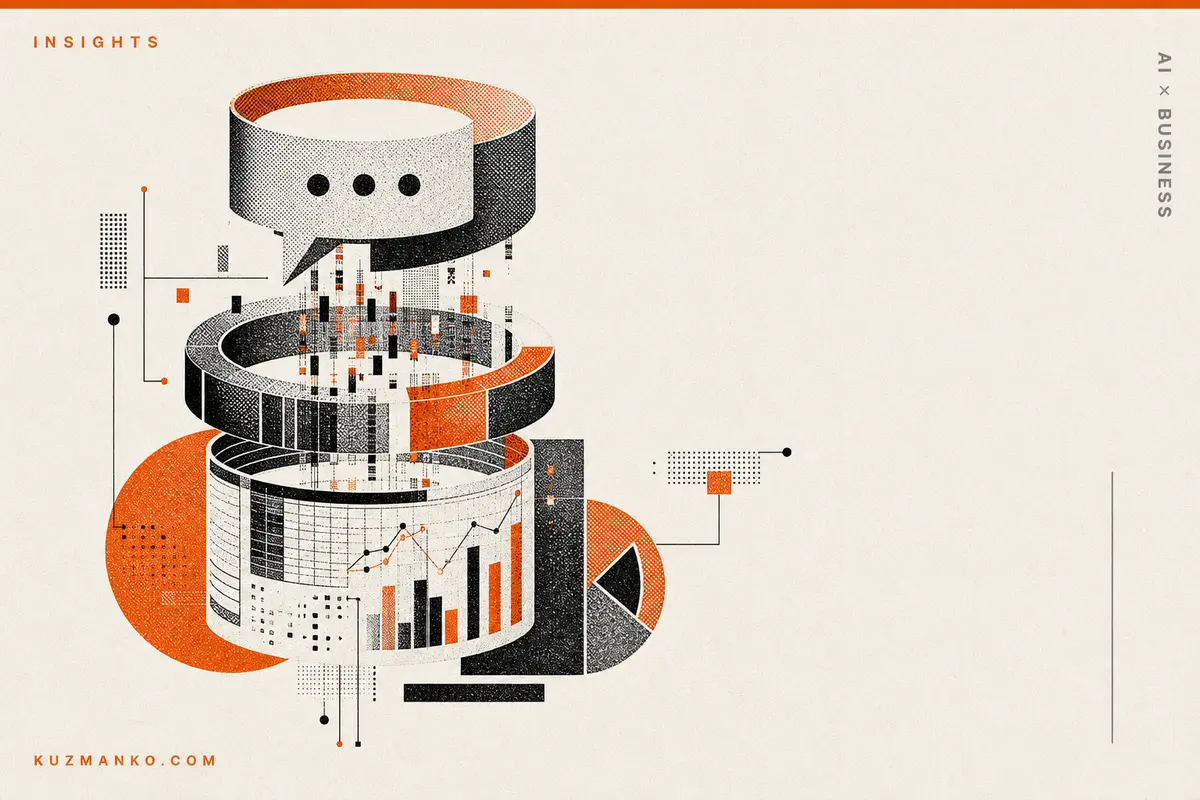
Hybrid AI in the Enterprise: Why LLMs Must Be Paired With Deterministic Analytics
Enterprise AI agents fail when they sound confident but calculate incorrectly. The reliable architecture is hybrid: language models for interpretation and deterministic data systems for computation, validation, and auditability.

Small AI Models, Big Enterprise Economics: Why Specialization May Beat Scale
Enterprise AI strategy is moving beyond the assumption that the largest model is always the safest choice. For defined business processes, specialized smaller models can deliver better quality, lower cost, and stronger operational control.

AGI and the End of the Human Monopoly on Intelligence
AGI may or may not have officially arrived, but the strategic shift is already here: cognition is becoming abundant, programmable, and operationally deployable. The companies that win will not be the ones chasing headlines, but the ones redesigning decision-making, workflows, governance, and AI agent infrastructure.

AI Layoffs Are Coming. The Real Question Is Whether Leaders Know What They Are Replacing
If 99% of CEOs expect AI-driven layoffs, the issue is no longer whether automation will affect headcount. The strategic question is whether companies are redesigning work intelligently or simply using AI as a convenient label for cost cutting.
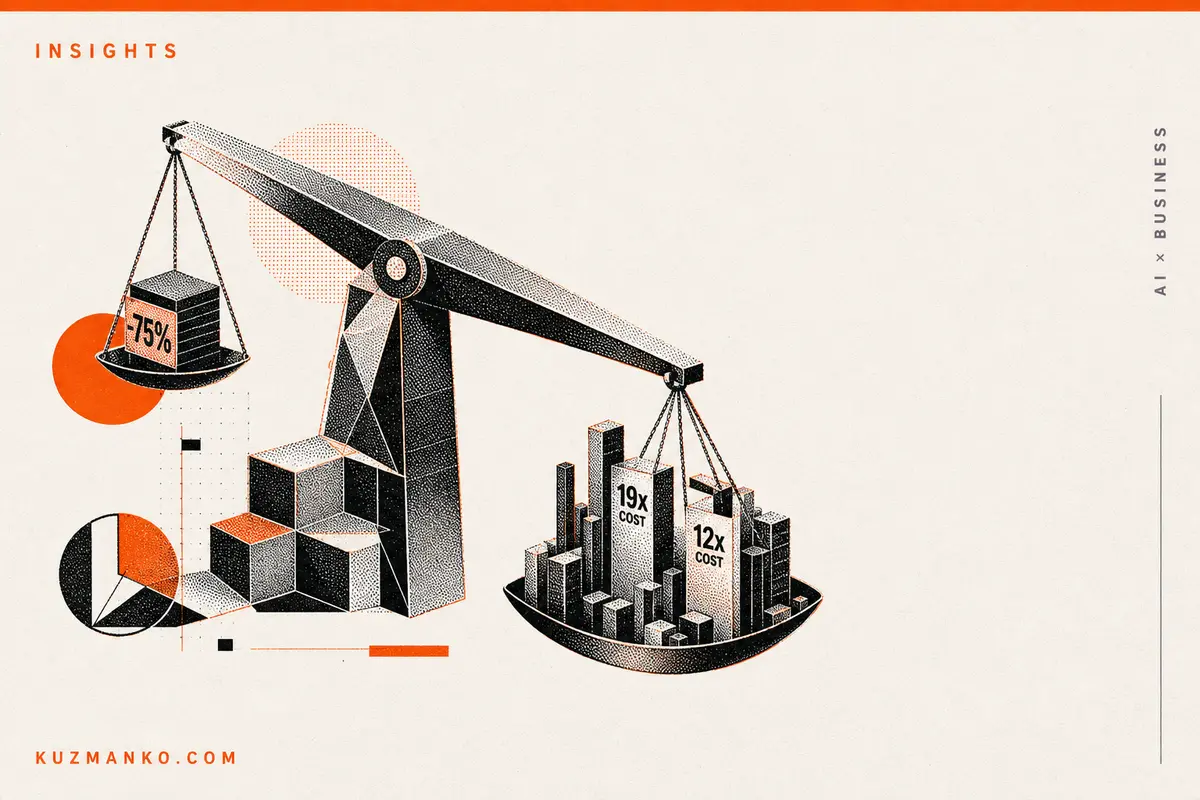
DeepSeek’s 75% Price Cut: Cheap AI Is Not the Same as Safe AI
DeepSeek’s permanent 75% price cut makes Chinese AI models financially tempting, but enterprise leaders should not confuse low token costs with low strategic risk. For Israeli and Western-facing companies, data exposure, jurisdiction, vendor control, and geopolitical dependency must be treated as board-level issues.

The AI Token Cost Crisis: Productivity, Waste, and the New Economics of Agents
AI costs are no longer a technical footnote. As agentic systems multiply token consumption, leaders need to measure value per workflow, not usage per employee.

Enterprise Document Intelligence: Why Business RAG Needs Less Vector Hype and More Engineering
Enterprise RAG fails when it treats documents as generic text blobs. Reliable document intelligence requires structure, domain expertise, auditability, and retrieval pipelines that can be explained under pressure.

AI Is Rewriting Accounting From the Inside Out
AI is not merely accelerating bookkeeping tasks. It is changing the operating model of accounting firms, finance teams, pricing, talent, controls, and the role of professional judgment.

Quantum Machine Learning Has a Data Problem, Not Just a Hardware Problem
Quantum machine learning will not become commercially useful simply because quantum processors improve. The harder bottleneck may be the unglamorous step before computation begins: loading classical data into quantum states efficiently and without destroying its structure.

AI Compliance Cannot Live in PDFs Anymore
GDPR and the EU AI Act are forcing organizations to convert legal intent into operational controls. The winners will be those that treat compliance as architecture, not paperwork.

MCP for Cloud Infrastructure: Natural Language Becomes an Operations Layer
AWS is pushing MCP, Bedrock, and secure agent runtimes into cloud operations. The real opportunity is not chat with infrastructure, but governed automation that helps teams manage cloud environments faster, safer, and at scale.

Will AI Models Stop Needing Retraining for Every New Task?
Self-optimizing AI systems such as SOLAR point to a future where models can adapt at use time instead of waiting for expensive retraining cycles. The opportunity is real, but enterprises should treat it as a governance and operating-model challenge, not only a machine learning breakthrough.

Beyond the Context Window: How Enterprises Should Analyze Documents Too Large for AI
Large context windows are useful, but they are not a strategy. Enterprises need agentic architectures that let AI search, reason, validate, and work across massive documents without forcing everything into a single prompt.
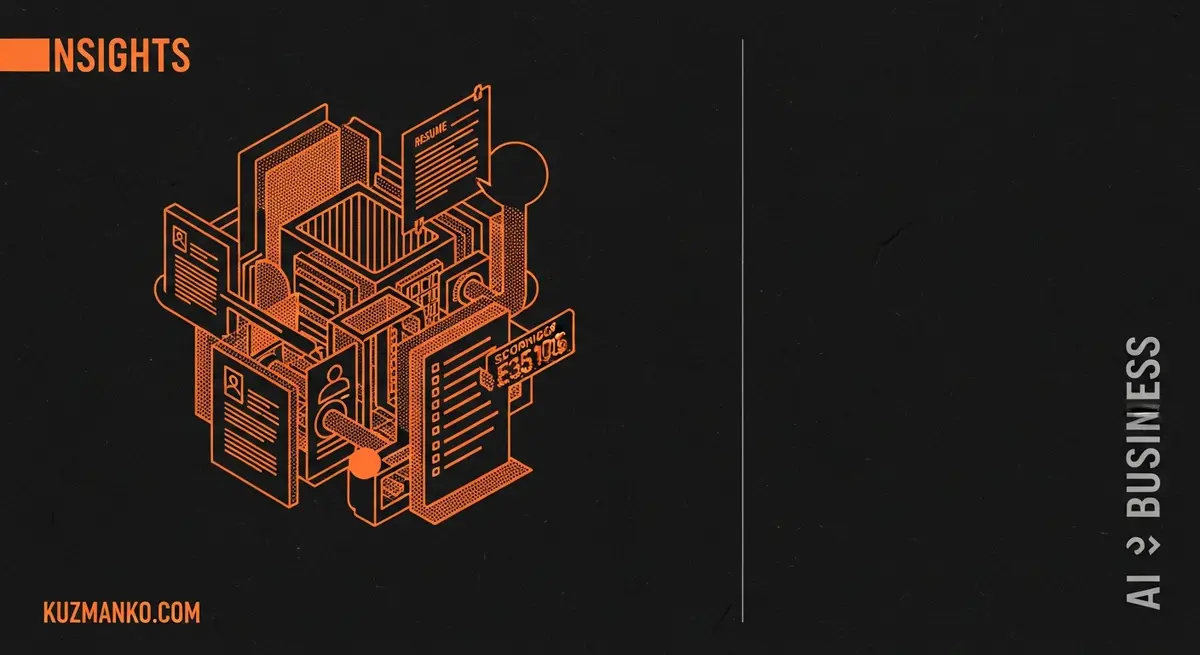
AWS Bedrock Recruiting Assistant: Useful Architecture, Not a Hiring Strategy
AWS has published a reference architecture for an AI recruiting assistant built on Amazon Bedrock. The real story is not resume scoring itself, but how enterprises should govern AI in high-risk, judgment-heavy workflows.

Three Claude AI Skills Every Data Scientist Should Master
Claude is changing the daily work of data scientists from manual coding and reporting into strategic analysis, orchestration, and pipeline supervision. The real advantage comes not from prompting alone, but from combining AI fluency, business context, and disciplined human oversight.

Benders Decomposition for AI Decisions: Solving Stochastic Optimization When the Model Is Too Big
Benders decomposition is not a nostalgic operations research technique. It is a practical way to make AI-driven decision systems work when uncertainty, scale, and real operational constraints exceed ordinary computing capacity.

Stop Treating LLM Output as a Promise
Structured LLM output is not reliable because the prompt is clever. It becomes reliable when the model is surrounded by validation, retries, fallbacks, auditability, and business-aware control logic.

Skills: turning your methodology into an asset agents can run
The highest-leverage AI skill for a business is not prompting. It is encoding how your best people work into reusable Skills that agents can execute consistently across systems.

The token economy: maximum output at minimum cost
Running AI in production is an OpEx problem as much as a modeling one. The token economy is about choosing the right model for each task and controlling consumption as you scale.
Less reading about AI. More results from it.
Book a 30-minute briefing with an engagement lead. We'll review your priorities, propose a discovery scope, and tell you honestly whether we're the right partner.